Janina Troper, co-founder
Research Grants
The Lab Gets a Lift
Meet the first cohort of Nebius’s AI Lift for researchers. Six teams, one question: what happens when science receives the GPUs and support it needs?
These days, the gap between a promising research result and a thriving startup is often measured in GPU hours.
Last week in San Francisco, Nebius took on that challenge, bringing together the inaugural cohort of AI Lift for researchers, a new track of the Nebius for Startups program that backs early-stage, AI-driven science with compute and business guidance. With the support of Nebius Academy, six teams were chosen, each applying AI to a problem that matters well beyond the lab, from cancer drug development to robot vision.
The pilot runs for eight weeks. Each team receives Nebius compute, hands-on help from Nebius solutions architects, go-to-market workshops, and introductions to venture investors. Candidates were sourced through recommendations from leading US universities and had to meet some baseline requirements that included company incorporation and a working MVP. Applications were scored jointly with Nebius Science based on the strength of the team, how realistic the scope was for the program’s duration, and compute needs.
“Research founders often reach a point where the scientific idea is strong but the path to scale is still unclear, ” said Mona Li, Vice President of Global Startup Ecosystem at Nebius. “AI Lift gives them a focused period to test that path with compute, technical expertise and access to customers and investors.”
Some of the teams are still stealth, some are public, but all of them share a pattern: each attacks a well-known limitation of today’s AI methods, and each needs more compute than a small lab can usually spare to find out whether the answer holds. The three public teams address very different bottlenecks in AI-driven science: better data for cancer drug discovery, reliable computer vision in complex lighting, and smaller, more efficient neural networks.
“Good science still starts with a question you can test,” said Artem Elmuratov, Director, AI Education & Science, Nebius. “Our compute grant lets a small team run that test at real scale. And compute is only part of the equation: we also share the engineering know-how to use it well, not only in experiments but in a production setting.”
We asked some of our finalists how the world will change if their projects succeed.
Anemos Bio
Anemos Bio is building the largest patient-derived lung cancer cell bank, paired with deep multi-omic data and AI models. About 90% of cancer drugs that pass preclinical testing still fail in clinical trials, largely because the field screens against immortalized cell lines that are decades old, demographically narrow, and predate modern targeted and immune therapies. The same homogeneous public data now trains most biological foundation models.
Anemos Bio creates lung cancer cell lines from today’s patients through clinical partnerships in the U.S. Each is paired with genomic, proteomic, drug-response, and clinical data. The company aims to build around 1,000 lines and eight million cell line–drug pairs, validating its AI predictions in the same cells used to train its models.

“If we succeed, cancer drug development becomes faster and far more likely to work, because it is built directly on data from today’s patients. Every patient who contributes a sample helps design the next drug, and every drug can be matched from the outset to the patient population most likely to benefit. Further ahead, patients would receive insights from their own cell models, showing which therapies or combinations worked against their cancer in the lab, to help guide their treatment.”
Ellipsoidal
Current AI vision models struggle with complex real-world lighting. One reason is their reliance on spherical harmonics, a limited way of representing how light is distributed in 3D. This restricts their deployment in robots and autonomous vehicles that operate in unstructured environments. Ellipsoidal builds computer vision models that thrive in complex, real-world lighting by leveraging ellipsoidal harmonics for advanced radiance processing.

Peter Shin, Founder, CEO
“If the project achieves its full potential, we will have a 3D computer vision model capable of encoding and rendering real-world light radiance in real time at a fraction of today’s compute cost and storage. World models would be able to generate massive, city-scale 3D scenes with realistic reflections, glare, and material appearances, rather than the matte visual outputs current models produce. For physical AI and robotics, anisotropic specular light is a direct cue to material properties: a robot that can distinguish polished metal from painted plastic, or a wet floor from a dry one, can grasp, step, and plan more safely in real-world environments.”
Perforated AI
Perforated is an AI optimization project combining modern neuroscience with software engineering to build smaller, more efficient neural networks that can match much larger models. Its technology brings the nonlinear decision-making mechanisms of biological dendrites into existing networks. Reported results include making workloads 38x cheaper and reducing error rates by up to 40%.
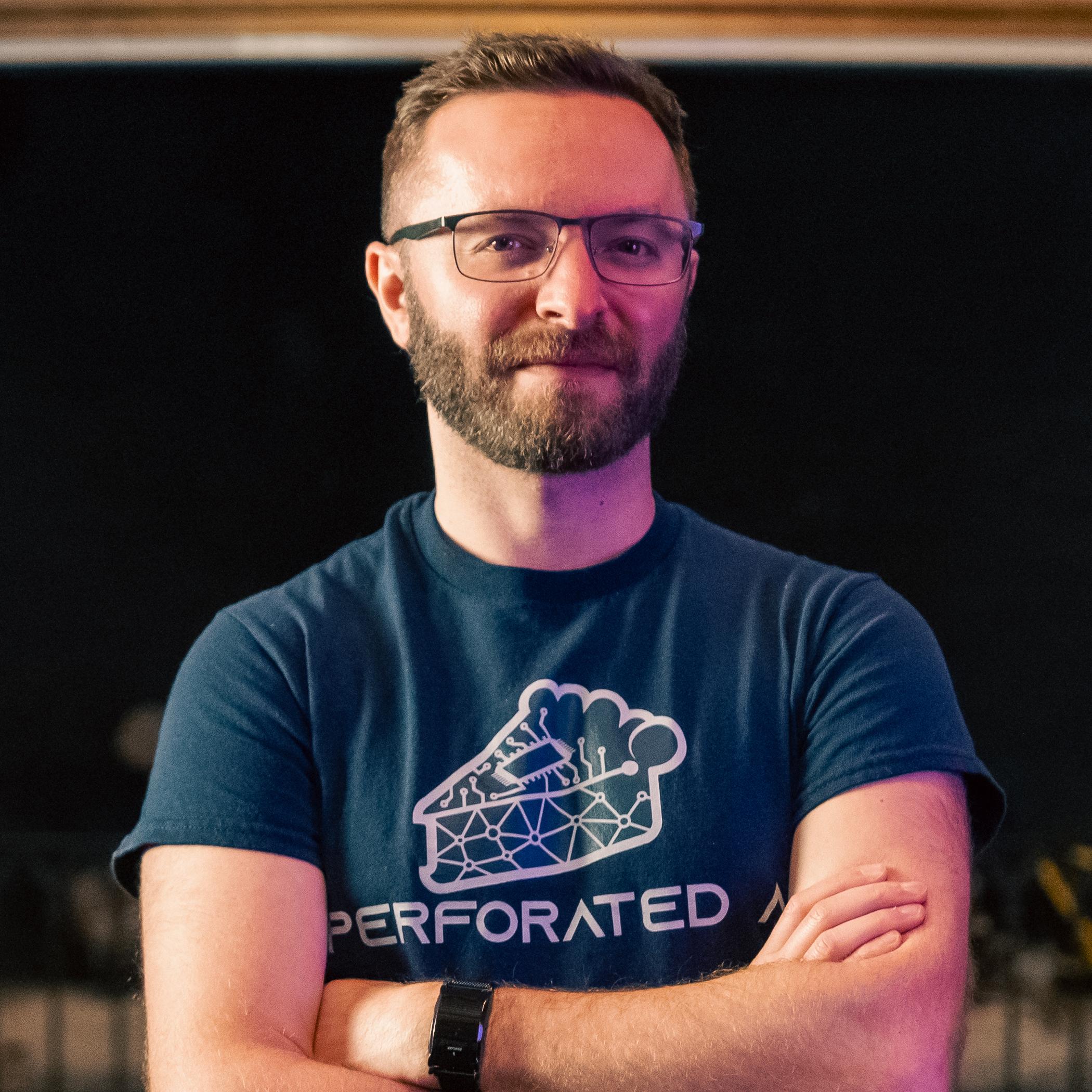
Rorry Brenner, Founder
“If this project is successful, our small but high performance language model will unlock new capabilities in resource-constrained environments. For example, high performing LLMs and AI agents could run locally on edge devices such as mobile phones and laptops.”
This pilot is just the beginning, said Viet Nguyen, senior Startup Accelerator manager. “Our goal is to build a global destination for researchers looking to commercialize their work. Whether they are from academic institutions or frontier labs, we want to be there day zero to amplify their impact.”
See also
Sign in to save this post